
Taylors City Directories Across Regional Collections
No verified Taylors-only published run was found. The useful Taylors directory trail is regional: Greenville and Greenville County volumes can include nearby places in some years, while leaving gaps in others. The Greenville County Library System South Carolina Room is the principal local repository for Taylors directories, microfilm, maps, newspapers, photographs, family files, research computers, and scanners. Its holdings make it the place to confirm a volume before treating a name as a Taylors match.
| Collection | Years | Where held | Access |
|---|---|---|---|
| Greenville, S.C. City and Suburban Directory, Piedmont Series XII | 1921–22 | South Carolina Room and Furman digitization | Public online, Taylors-area context |
| Hill Directory Co., Hill's Greenville | 1931, 1933, 1935, 1938, 1940–45, 1962–65, 1967–74, 1977, 1980 | GCLS catalog | Library use only for Taylors research |
| R.L. Polk Greenville directory | 1997–; South Carolina Room 2008–24; branch references 2025 | GCLS catalog and branches | Regional Taylors reference |
| infoUSA / Data Axle cross-reference directory | 2007–; title changes to Data Axle in 2022 | GCLS catalog | Annual Taylors reverse-reference product |
| Greenville City Block Book | 1923–24 | South Carolina Room microfiche | Greenville City context only |
Those gaps are meaningful. A regional directory can help locate a Taylors household, but it does not guarantee that every Taylors address or resident was covered. The 1923–24 City Block Book is specifically City of Greenville material, so it should not be stretched across Taylors.
The South Carolina Room provides the local-history setting for the collection.
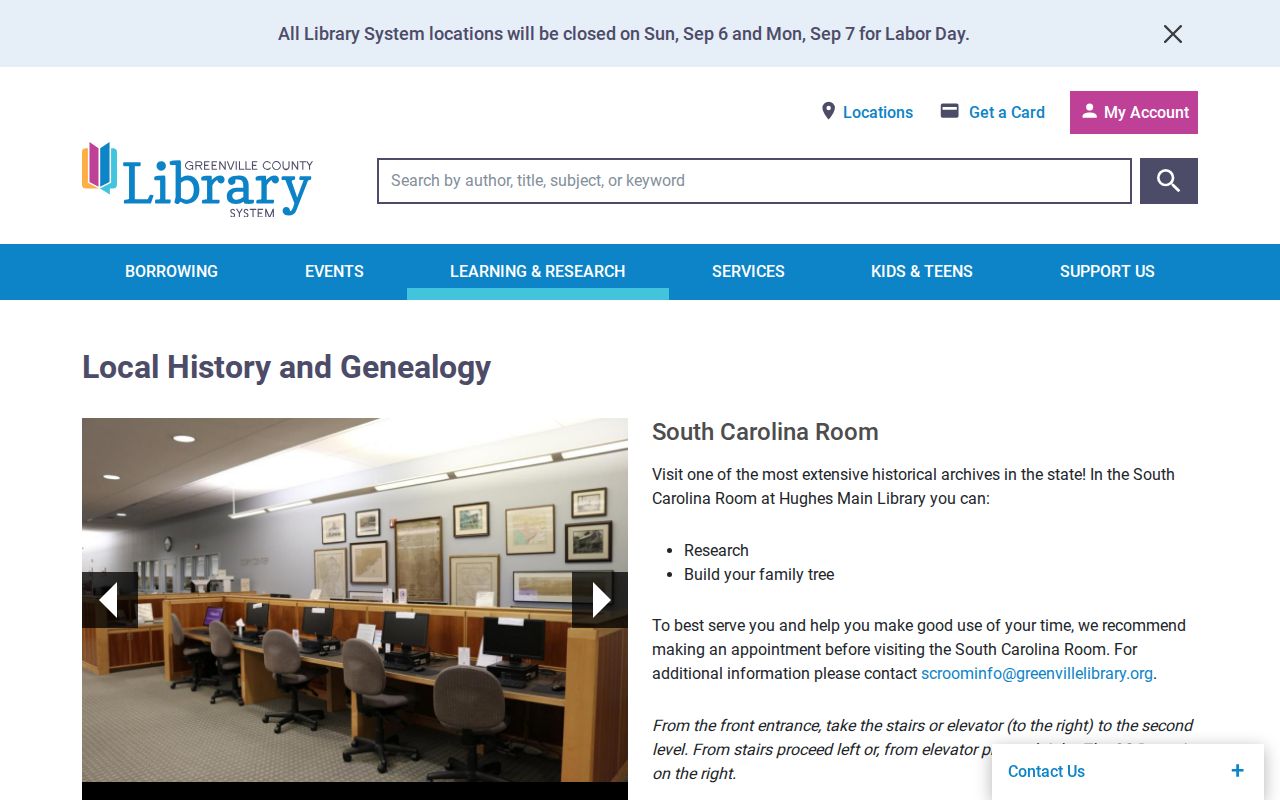
Its second-floor collection at Hughes Main is the Taylors directory and microfilm destination, even though the Taylors branch can help with basic library access.
Taylors City Directory Research at the South Carolina Room
The South Carolina Room is at Hughes Main Library, 25 Heritage Green Place in Greenville. Appointments are recommended; the room lists 864-527-9212 and scroominfo@greenvillelibrary.org. Bring Taylors spelling variants, approximate years, former street names, and known relatives. Staff can identify the particular microfilm reel, directory, or family-file call number before copying. That small step preserves the Taylors volume and page needed to revisit a finding.
For remote work, the GCLS historical-record request form accepts a Taylors record category, subject name, dates or other detail, delivery choice, and contact information. Newspaper and vital searches cost $5; Greenville deed and probate searches cost $15. The stated processing time is up to five business days, and prepayment is nonrefundable if nothing is found. A bounded request with a surname, address, date range, and record type is more workable than an open-ended request to identify a person.
The remote request form shows the available historical-record categories and delivery options.
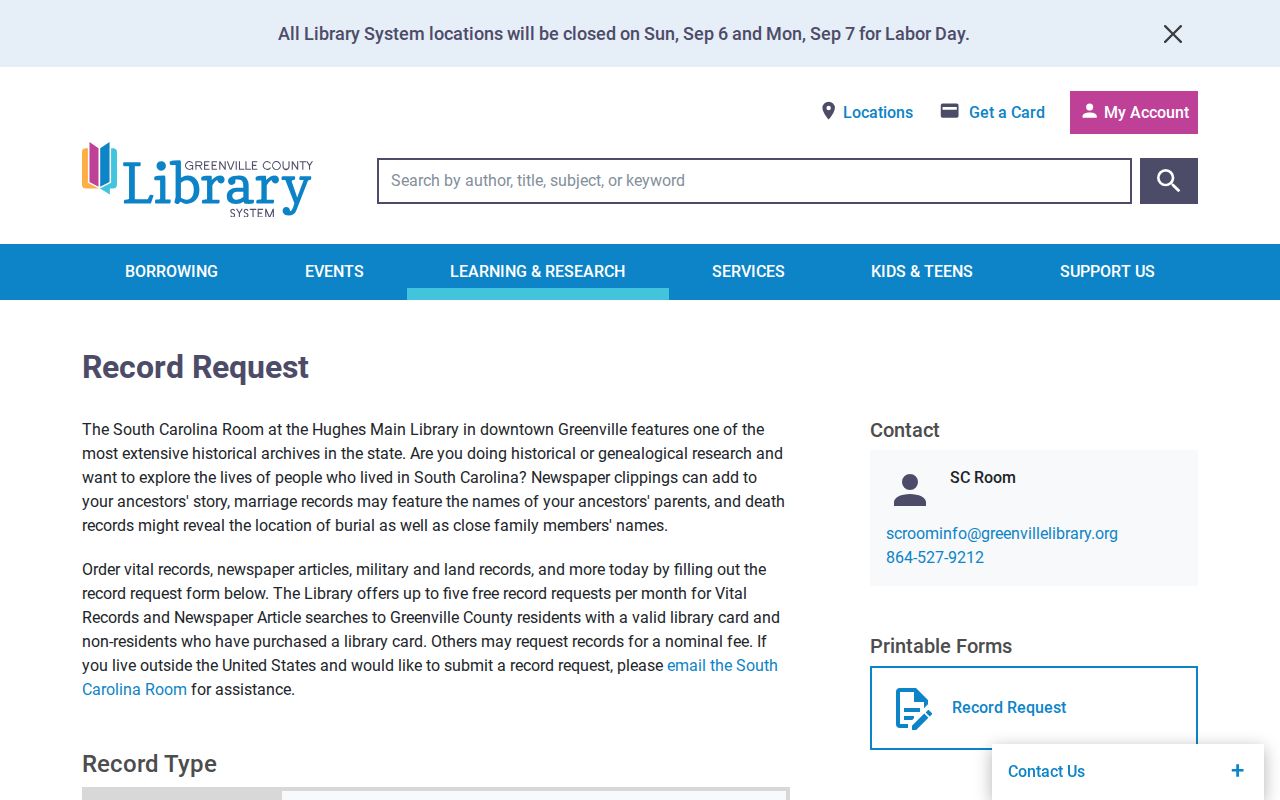
Remote staff research can bridge a missing Taylors visit, but the library's shelves and microfilm remain the better route when a Taylors question needs several adjacent years.
Note: The Taylors Burdette Branch is useful for computer access and librarian help, while the South Carolina Room holds the archival directory route.
Taylors City Directory Names Need Cross-Checking
Historic searching has a local name trap. The library traces the area from Chick Springs Resort to Taylor's Station after the railway arrived, then to the twentieth-century name Taylors. A direct Taylors query can miss material filed under Chick Springs, Taylor's Station, a nearby Greenville heading, or Greenville County. Record the form used by each source instead of silently normalizing it.
This is also why a City of Greenville source cannot automatically establish a Taylors address. City limits changed over time, and the library's house-history material cautions that city map resources may cover only homes "in city." Keep the Taylors printed address with its date, parcel or map number, legal description, and historical place name. Together, those details make a later comparison possible.
How a Taylors City Directory Entry Reads
The digitized 1921–22 Greenville directory shows what a historical Taylors entry can hold. It records a name and initials, may place a spouse in parentheses, and can give a widow or marital clue, occupation, a printed business name, and an h residence address. Repeated Taylors addresses may point to a household connection, but they do not prove a relationship or continuous residence. Photograph or transcribe the abbreviation key along with the entry.
| Name and initials | Identifies the printed person, often in a shortened form. |
|---|---|
| Parenthetical spouse or widow cue | Offers a family clue that should be checked in dated records. |
| Occupation and business | Helps distinguish people with the same name. |
h residence address | Marks the house address in the 1921–22 key. |
emp and bds | Indicate work field and boards; they are not present-day labels. |
- Criss-cross directory
- An address-order reference that can supply a household clue for a particular year. It is not proof of deed ownership.
- Householder index
- An index arranged around household or address access rather than a complete modern resident roll.
- Abbreviation key
- The volume's printed explanation for short marks such as
h,emp, andbds.
An asterisk in the 1921–22 publisher's key was a historic racial classification. It should be read only as historical indexing, never as a current category. Directory presence also does not establish a full Taylors enumeration.
The digitized 1921–22 Greenville City and Suburban Directory provides a view of the volume and its surrounding pages.
Read the key and neighboring Taylors entries, not only the matching surname, because printing practices and address context vary within a volume.
Taylors City Directory Companions in GCLS Databases
A directory is strongest when it is paired with another dated source. GCLS provides a genealogy and historical-research database list with Greenville News full text from 1999 forward, historic newspapers from 1777–1963, and in-library access to several family-history databases. Its obituary index reaches from 1901 to the present, and its marriage-announcement index begins in 1990. Preserve the title, date, page, repository, and image or entry identifier for every newspaper result.
A newspaper announcement is not a civil record. It can help narrow a Taylors date or distinguish two Taylors people with the same name, then a probate, deed, census, or official certificate route can provide the next check. The county-and-state-records pathway also points Taylors researchers toward directory, deed, plat, old property-card, probate, will, and obituary resources without pretending that one database supplies them all.
The GCLS genealogy databases page identifies the research services available through the library system.
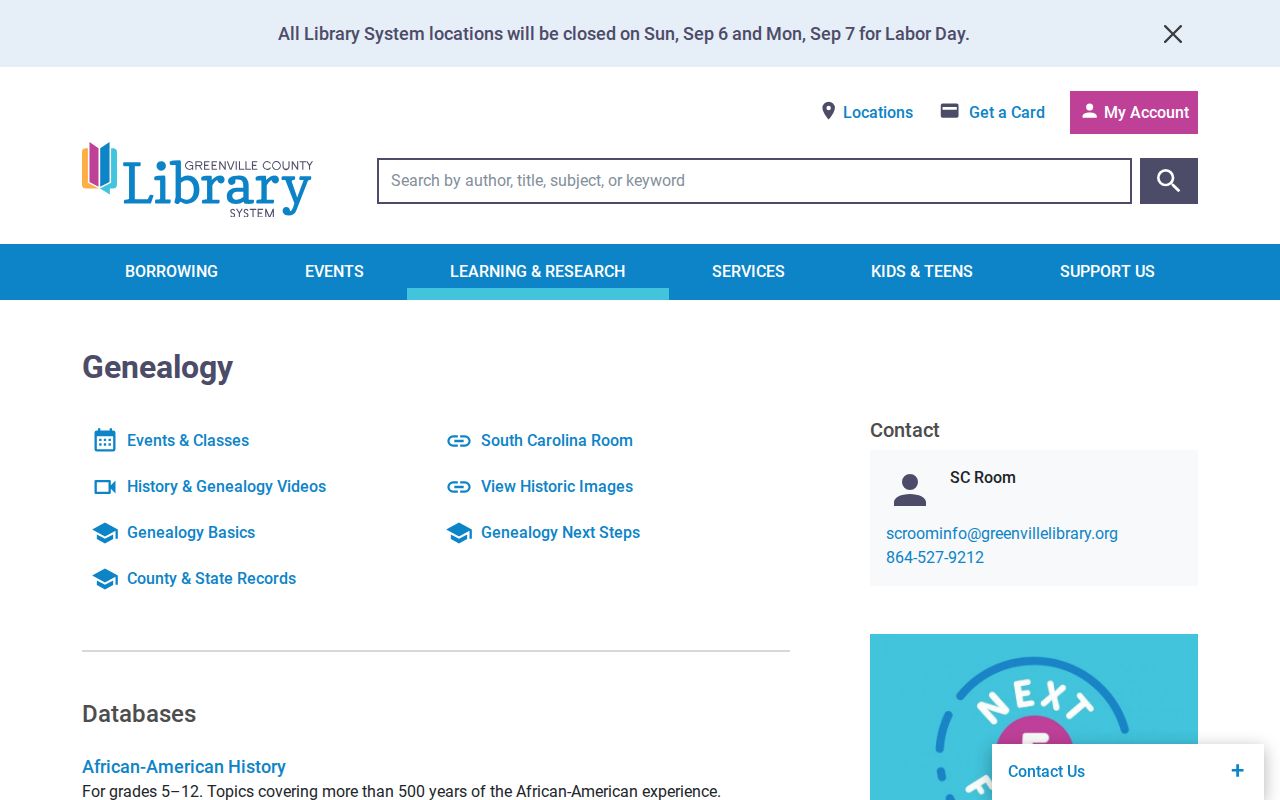
The database list supports a layered check of a directory entry instead of a leap from a printed name to an unsupported conclusion.
Trace Taylors City Directory Households Over Time
To follow one Taylors household, search the surname, the three place variants, and a nearby street in the first useful volume. Copy the Taylors address, spouse initials, abbreviation marks, and page. Then move to the next available directory rather than assuming that the next calendar year exists. Pair the closest held volume with the nearest released federal census schedule. The National Archives makes public schedules available through 1950, while the release timetable follows the 72-year rule.
- Start with the first regional directory that matches the Taylors surname, place variant, and approximate date.
- Copy the Taylors entry, its page, address, spouse clue, occupation, and each abbreviation used.
- Check the next held volume and note Taylors moves, changes in a spouse notation, or disappearance from the listings.
- Match that Taylors time period to the closest federal census and compare the household address and names.
- Use deed book and page references, probate, or the obituary index to test a Taylors address change or a final disappearance.
A person who drops out of one directory may have moved, died, changed how the name was printed, or simply been missed. The GCLS house-history path links directories, county maps, deeds, old property cards, obituaries, and probate papers for exactly that kind of dated comparison.
Taylors City Directory Clues in the Mill Era
Taylors history helps explain why regional sources are needed. The library connects Chick Springs Resort, Camp Sevier during World War I, Southern Bleachery's 1924 opening, and later growth along Wade Hampton Boulevard. A Taylors family trail may move among rural land material, resort or newspaper references, regional directories, and mill-village address sources. That is a records pattern, not evidence that a person was associated with every place listed nearby.
For background, the South Carolina Department of Archives and History's Southern Bleachery/Print Works National Register material describes the mill-village context of homes, a store, school, and churches. Use it to understand an address or place name, then return to a dated directory, deed, census, or original archival item for a person-specific finding.
Taylors City Directory Fallbacks Beyond Library Shelves
When the South Carolina Room does not hold a needed Taylors year, the next routes are the GCLS remote request, archival guides, and repository staff. The county and state records guide is the practical local index to the library's resources. The South Carolina Department of Archives and History lists Greenville County conveyances from 1787–1904, estate papers from 1787–1951, will books from 1820–1903, voter books from 1868–1936, and other series as holdings or microfilm, not as a promise that every item is online.
Greenville Historical Society reports photographs and archives containing maps and directories, while Furman Special Collections can provide manuscript or church context. Neither replaces the official copy of a deed or probate record. For a present-day parcel or ownership question, use the county's address-keyed records rather than trying to force a historical directory to answer it. Taylors street records provide that different, current property route.
The county and state records research guide shows the library's approved starting routes.
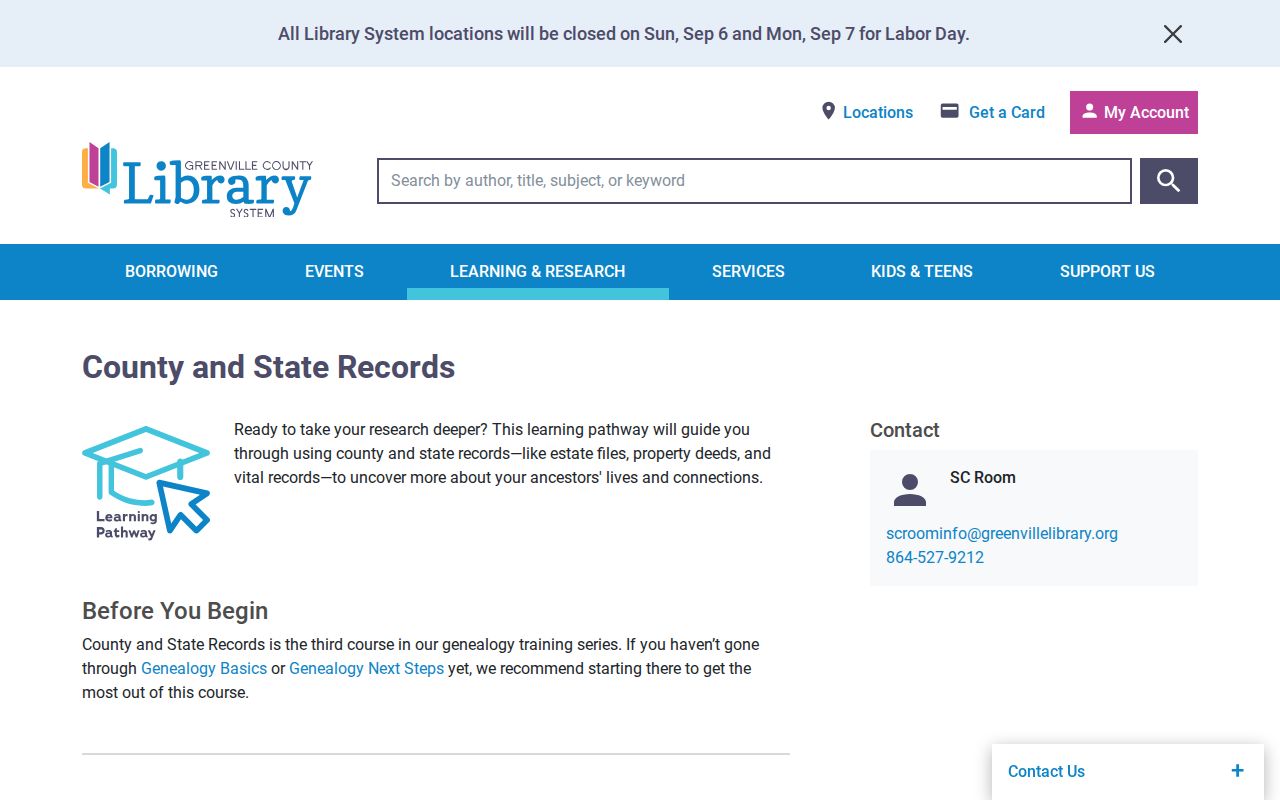
Use a repository guide to select the right collection, then retain the item or call number and access date with the result.
Note: An empty online result may reflect collection limits, a place-name change, or a restricted shelf, not the absence of a historical record.